


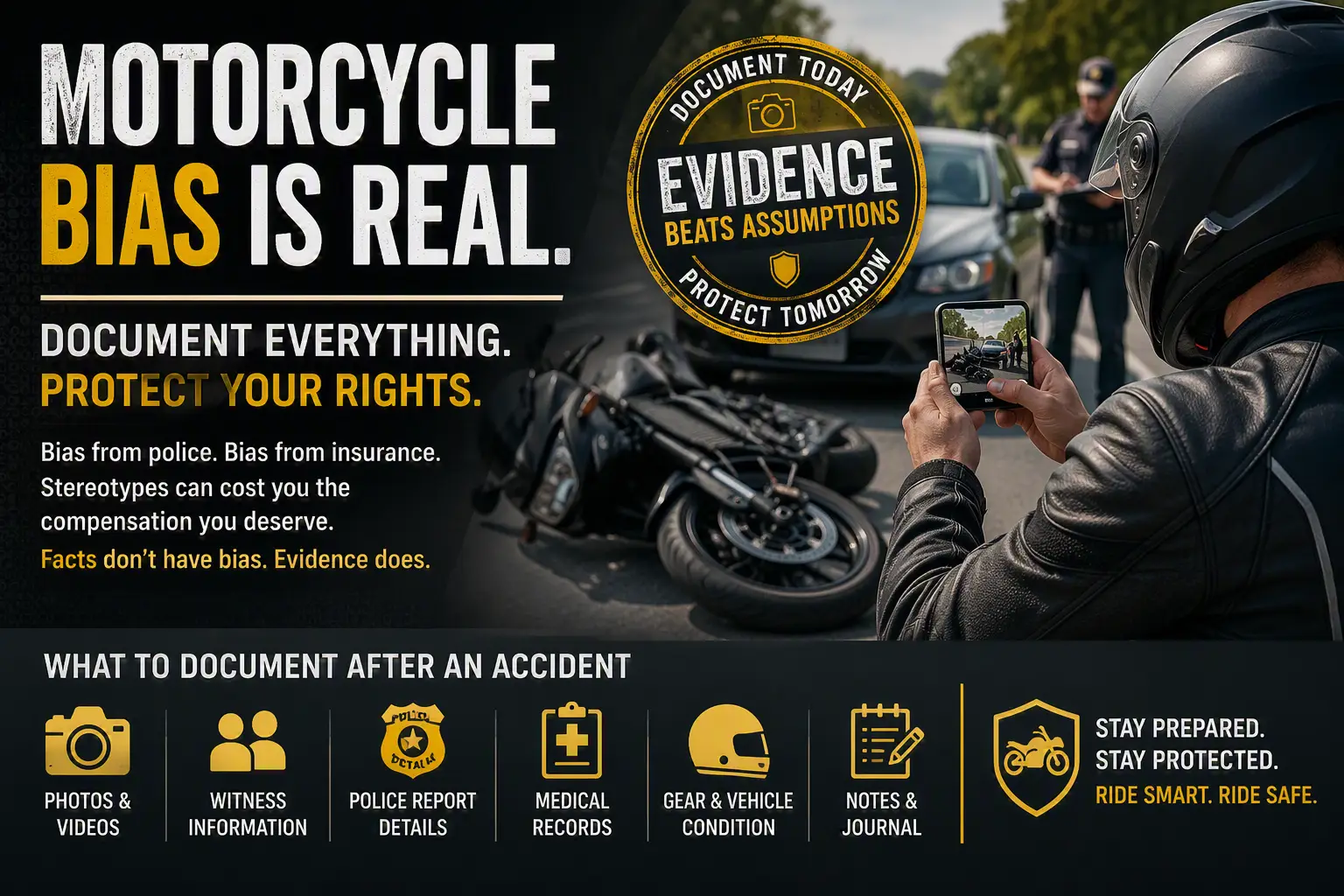
Motorcyclists often face more than physical injuries after a crash. They can also face an uphill battle against assumptions, stereotypes, and bias from witnesses, police officers, insurance adjusters, and even jurors. That’s why documenting everything immediately after a motorcycle accident is one of the most important steps a rider can take to protect their rights and ensure the facts speak louder than misconceptions.
Bias against Bikers
For many motorcycle riders, the most frustrating part of an accident is not just the collision itself. It’s the battle that comes afterward. Despite the fact that millions of Americans ride responsibly every day, motorcyclists are often unfairly stereotyped as reckless, speeding, or risk-taking individuals. These assumptions can influence how an accident is investigated, how insurance claims are handled, and ultimately who is blamed for a crash. When a motorcycle accident wasn’t your fault, proper documentation can become your strongest defense against bias and misinformation.
The Reality of Motorcycle Bias
Many riders have experienced it firsthand.
A car turns left in front of a motorcycle. A distracted driver changes lanes without looking. A motorist fails to yield the right-of-way. Yet the first question often asked is:
“How fast was the motorcycle going?”
While speed can be a factor in some crashes, the assumption that the rider must have been responsible persists even when evidence suggests otherwise.
Motorcycles are smaller and less visible than passenger vehicles, which often leads drivers to overlook them. Unfortunately, after a collision occurs, some people may unconsciously shift blame toward the rider simply because motorcycles are perceived as inherently dangerous.
Police Bias: The Importance of Accurate Reports
Law enforcement officers have a difficult job and most strive to remain objective. However, they often arrive at chaotic accident scenes where they must make quick assessments based on limited information.
If witnesses provide incomplete accounts or if the rider is injured and unable to speak, the initial police report may not tell the entire story.
Potential issues riders face include:
-
- Assumptions about excessive speed.
-
- Assumptions about aggressive riding.
-
- Failure to identify a driver’s distraction.
-
- Incomplete witness statements.
-
- Overlooking roadway hazards that contributed to the crash.
A police report often carries significant weight with insurance companies and attorneys. If important details are omitted, correcting those inaccuracies later can be difficult.
What Riders Should Do
If physically able:
-
- Obtain the responding officer’s name and badge number.
-
- Ask how to obtain a copy of the accident report.
-
- Take notes regarding conversations at the scene.
-
- Identify all witnesses.
-
- Document road conditions, weather, and traffic controls.
-
- Take photographs before vehicles are moved whenever possible.
The more objective evidence available, the easier it becomes to establish what actually happened.
Insurance Company Bias
Insurance companies are businesses. Their goal is to evaluate claims and control costs. Unfortunately, some adjusters may begin with preconceived notions about motorcycle riders.
Common assumptions may include:
-
- The rider was speeding.
-
- The rider was lane splitting, even in states where it is prohibited.
-
- The rider was riding aggressively.
-
- The rider assumed greater risks simply by choosing a motorcycle.
Even when these assumptions are unfounded, they can influence negotiations and claim evaluations.Insurance companies often look for reasons to reduce payouts or shift a percentage of fault to the injured rider. A small increase in assigned fault can significantly reduce compensation in comparative negligence states.
Why Documentation Is Your Best Defense
Evidence doesn’t care about stereotypes. Good documentation can quickly dismantle inaccurate assumptions and establish the facts.
Photograph Everything
Take pictures of:
-
- Vehicle damage.
-
- Your motorcycle from multiple angles.
-
- Skid marks.
-
- Debris fields.
-
- Traffic signs.
-
- Road conditions.
-
- Weather conditions.
-
- Visible injuries.
Photographs taken immediately after a crash are often more persuasive than recollections months later.
Collect Witness Information
Independent witnesses can make or break a case.
Obtain:
-
- Names.
-
- Phone numbers.
-
- Email addresses.
-
- Brief statements if possible.
Witnesses often leave before police arrive. Once they’re gone, tracking them down can be difficult.
Preserve Helmet and Riding Gear
Never discard:
-
- Helmets.
-
- Jackets.
-
- Gloves.
-
- Boots.
-
- Riding pants.
These items may become important evidence regarding impact dynamics, visibility, and injury severity.
Use Technology
Modern riders have powerful tools available:
-
- Helmet cameras.
-
- Handlebar cameras.
-
- GPS tracking apps.
-
- Smartphone photographs.
-
- Smartwatch crash data.
Video evidence frequently removes any opportunity for biased speculation.
Medical Documentation Matters Too
Seek medical treatment immediately after an accident, even if injuries seem minor.
Many motorcycle injuries worsen over time, including:
-
- Concussions.
-
- Soft tissue injuries.
-
- Neck injuries.
-
- Internal injuries.
Insurance companies may argue that delayed treatment means injuries weren’t serious or weren’t caused by the crash.
Follow all medical recommendations and maintain copies of:
-
- Emergency room records.
-
- Diagnostic tests.
-
- Doctors’ notes.
-
- Physical therapy records.
-
- Prescription receipts.
Social Media Can Hurt Your Case
Many injured riders unknowingly damage their claims by posting online.
Avoid posting:
-
- Photos of riding after the crash.
-
- Discussions about fault.
-
- Details of settlement negotiations.
-
- Activities that could be misconstrued as evidence of recovery.
Insurance investigators routinely monitor public social media accounts.
Keep a Rider’s Recovery Journal
One of the simplest but most effective tools is a daily journal.
Record:
-
- Pain levels.
-
- Medical appointments.
-
- Missed work.
-
- Activities you can no longer perform.
-
- Emotional impacts.
-
- Family hardships.
These records can provide valuable evidence of how the accident affected your life.
Fighting Bias with Facts
Motorcycle riders cannot always control the assumptions others make. They cannot eliminate stereotypes held by some drivers, insurance adjusters, or investigators.
What they can do is document the facts.
Every photograph, witness statement, medical record, video clip, and written note helps create a clear picture of what occurred. When evidence is preserved immediately, it becomes much harder for anyone to shift blame or allow bias to influence the outcome.
The truth is simple: riders deserve the same fairness and protection as every other motorist on the road. Thorough documentation ensures that decisions are based on evidence, not stereotypes.
Final Thoughts
If you’ve been involved in a motorcycle accident that wasn’t your fault, act like your case depends on the evidence you collect because it often does. Motorcycle bias is real, whether it comes from assumptions at the crash scene, insurance negotiations, or legal proceedings. The best way to combat that bias is through documentation, preparation, and persistence.
When the facts are preserved, the truth has a much better chance of prevailing.

